
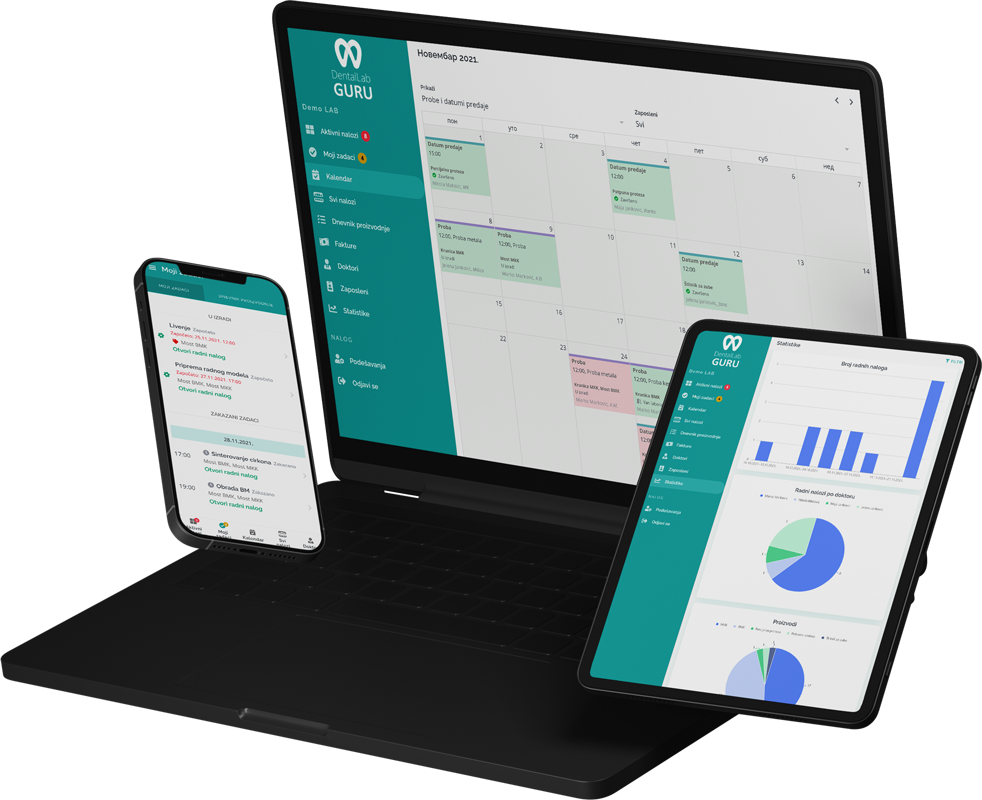
Required case information
A night guard should not be treated as a generic small job. Record the arch, guard design, material and thickness, bite or occlusal instructions, source records, and promised delivery before fabrication.
- Guard type and material
- Upper or lower arch
- Thickness, occlusion, and adjustment notes
- Due date, dentist, files, and delivery status
Typical production stages
Use a short but explicit sequence so guards cannot disappear between model or digital preparation, fabrication, adjustment, quality control, and delivery.
- 1 Intake
- 2 Model or digital preparation
- 3 Fabrication
- 4 Finishing and adjustment
- 5 Quality check
- 6 Delivery and invoice
Common bottlenecks
- Material preferences missing from intake
- Cases treated as small jobs and forgotten
- Rush work mixed into normal production
- Finished guards not marked delivered
Intake acceptance card
Four checks before a night guard joins the production queue
Night guards are easy to under-document because they appear routine. A compact acceptance card prevents material, arch, and occlusal assumptions from reaching fabrication.
| Acceptance check | Ready signal | Common exception |
|---|---|---|
| Guard design | Upper or lower arch, design or coverage, and intended material are explicit | The prescription says only “night guard” |
| Thickness and occlusion | Thickness, opposing record, and adjustment instructions are available where required | No bite information or conflicting thickness notes |
| Production input | The model or scan is usable and belongs to the recorded patient reference | Poor data, unclear arch, or mismatched files |
| Promise | Finish date includes adjustment, quality check, and delivery time | A small job is accepted as rush without schedule review |
The lab should apply its qualified technical review and the dentist’s prescription when deciding whether the supplied records are adequate.
Best practices
Create a standard night guard intake checklist.
Use stage status even for small cases.
Group similar appliances for production planning.
Close the loop with delivery and invoice status.